
백자 향로 중국 청|白磁 香爐 中國 淸|Incense burner
Unknown Artist
late 18th–first half 19th century
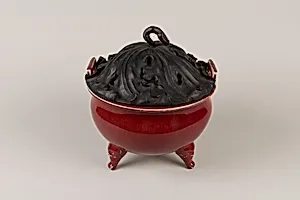
Medium
Porcelain with red flambé glaze
Dimensions
Height (with cover): 10 1/4 in. (26 cm) Height (without cover): 6 1/2 in. (16.5 cm) Diameter: 9 in. (22.9 cm)
Classification
Ceramics
Culture & Period
China · Qing dynasty (1644–1911)
Department
Asian Art
Museum
Metropolitan Museum of Art, New York, NY
Credit
Purchase by subscription, 1879
Accession Number
79.2.798a, b
Rights
Public Domain
Art Historical Context
This elegant incense burner, crafted in China during the Qing dynasty (4–1911) in the late 18 to first half of the 19 century, exemplifies the period's mastery of porcelain artistry. Standing 10¼ inches tall with its cover, it was designed for burning incense in domestic altars, temples, or studios, where fragrant smoke symbolized offerings to ancestors, deities, or for meditation. Acquired by the Metropolitan Museum of Art through public subscription in 1879 it reflects early Western fascination with Chinese ceramics. The burner's white porcelain body is vividly transformed by a red flambé glaze—a sophisticated technique where iron-rich glaze is fired at high temperatures, causing it to flow and crackle like flames, producing dramatic crimson streaks against the pale ground. This flambé effect, perfected in the Qing era, showcased imperial kilns' innovation, blending technical precision with aesthetic drama. Though the artist remains unknown, such pieces were often produced in Jingdezhen, the porcelain capital, for elite patrons. Culturally, it highlights Qing opulence and ritual life, where incense burners bridged the spiritual and material worlds. Visitors can appreciate its tactile form—6½ inches without the pierced cover—and swirling glaze up close, evoking the dynasty's blend of tradition and experimentation.