
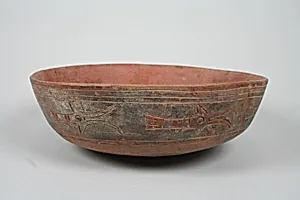
Incised bowl with birds
Unknown Artist
3rd–2nd century BCE
Medium
Ceramic, pigment
Dimensions
H. 2 15/16 × Diam. 8 3/4 in. (7.5 × 22.2 cm)
Classification
Ceramics-Containers
Culture
Paracas
Department
Arts of Africa, Oceania, and the Americas
Museum
Metropolitan Museum of Art, New York, NY
Credit
Gift of Nathan Cummings, 1962
Accession Number
62.266.37
Rights
Public Domain
Tags
Art Historical Context
This delicate incised bowl with birds hails from the Paracas culture of ancient Peru, dating to the 3rd–2nd century BCE. Crafted a ceramic container, it measures just under 3 inches tall and nearly 9 inches across, perfect for everyday use or ritual offerings in a society flourishing along Peru's southern coast. The Paracas people, predecessors to the Inca, were renowned for their sophisticated artistry, often blending functionality with symbolic decoration to reflect their worldview. The bowl's surface features intricate incisions—fine lines carved into the clay before firing—depicting birds, a motif rich in cultural meaning. These avian figures likely symbolized fertility, the spirit world, or celestial forces, common in Andean iconography. Traces of pigment enhance the designs, adding vibrancy and depth to the otherwise earthy ceramic. This technique highlights the Paracas mastery of pottery, where precise toolwork created textured, enduring patterns without relying on complex glazing. Now housed in the Metropolitan Museum of Art's Department of the Arts of Africa, Oceania, and the Americas, thanks to a 1962 gift from Nathan Cummings, this bowl offers a window into pre-Columbian life. Its survival speaks to the enduring legacy of Paracas craftsmanship, inviting us to ponder the hands that shaped it millennia ago.