
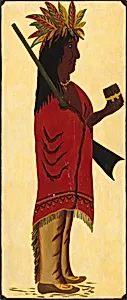
Indian Tobacco Shop Sign [reverse, Indian facing right]
second half 19th century
Medium
oil on wood
Dimensions
overall: 136.4 x 57.8 cm (53 11/16 x 22 3/4 in.)
Classification
Painting
Department
CAB
Museum
National Gallery of Art, Washington, D.C.
Credit
Gift of Edgar William and Bernice Chrysler Garbisch
Accession Number
1980.62.33.b
Rights
Public Domain
Art Historical Context
Step into the vibrant world of 19th American roadside commerce with this *Indian Tobacco Shop Sign [reverse, Indian facing right]* Created by an anonymous American artist in the second half the 1800s, this double-sided wooden panel measures an impressive 136.4 x 57.8 cm (53 11/16 x 22 3/4 in.), for catching the eye of passing trade. Painted in oil on wood—a sturdy medium ideal for enduring the elements—this reverse view features a Native American figure facing right, likely part of a promotional display for a tobacco vendor. Shop signs like this were essential vernacular art in bustling American towns, blending bold advertising with folk traditions. The recurring use of Native American imagery symbolized the "exotic" origins of tobacco, drawing on cultural stereotypes to entice customers amid the era's booming trade in pipes, cigars, and chewing tobacco. As a snapshot of everyday commerce, it reflects how ordinary objects became canvases for public expression. Today, this piece graces the National Gallery of Art's collection (Department: CAB), a generous gift from Edgar William and Bernice Chrysler Garbisch. Its folkloric charm invites us to appreciate the unsung creativity of 19th-century artisans who turned functional signs into lasting cultural artifacts.
About the Artist
American 19th Century · 1800–1900
The artist cataloged as "American, 19th Century" represents a collective of unidentified painters active in the United States during the nineteenth century, with 380 known artworks preserved in this virtual museum's collection. These works span a diverse array of genres typical of the era, including portraits, landscapes, still lifes, and genre scenes, reflecting the burgeoning artistic output of ...