
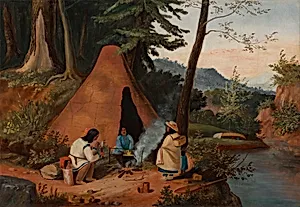
Indians Cooking Maize
second half 19th century
Medium
oil on canvas
Dimensions
overall: 45.7 x 66 cm (18 x 26 in.) framed: 59.7 x 80 x 3.8 cm (23 1/2 x 31 1/2 x 1 1/2 in.)
Classification
Painting
Department
CAB
Museum
National Gallery of Art, Washington, D.C.
Credit
Gift of Edgar William and Bernice Chrysler Garbisch
Accession Number
1971.83.16
Rights
Public Domain
Art Historical Context
"Indians Cooking Maize," evocative oil on canvas from the half of the 19 century, captures a poignant moment in Native American daily life. Created by an anonymous American artist, this painting measures 18 x inches and exemplifies the period's interest in ethnographic subjects. Oil on canvas was a favored medium for its ability to render rich textures—from the golden hues of maize to the earthy tones of traditional cooking vessels—allowing viewers to almost smell the simmering corn. In the post-Civil War era of westward expansion, artworks like this offered romanticized glimpses into indigenous cultures amid rapid change and displacement. Maize, or corn, held profound cultural significance as a staple crop domesticated by Native peoples thousands of years earlier, symbolizing sustenance and community. This piece reflects 19th-century American fascination with "vanishing" traditions, blending observation with artistic interpretation. Now housed in the National Gallery of Art's CAB department, the painting was a generous gift from Edgar William and Bernice Chrysler Garbisch, renowned collectors of American folk art. Its intimate scale invites close contemplation, bridging historical narratives with timeless human stories of hearth and harvest.
About the Artist
American 19th Century · 1800–1900
The artist cataloged as "American, 19th Century" represents a collective of unidentified painters active in the United States during the nineteenth century, with 380 known artworks preserved in this virtual museum's collection. These works span a diverse array of genres typical of the era, including portraits, landscapes, still lifes, and genre scenes, reflecting the burgeoning artistic output of ...