
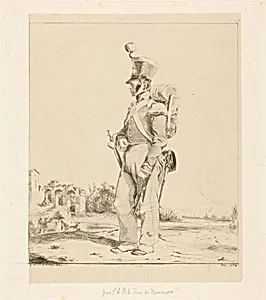
Infantryman
Medium
etching on chine collé
Dimensions
plate: 33 x 29 cm (13 x 11 7/16 in.) sheet: 49.4 x 34 cm (19 7/16 x 13 3/8 in.)
Classification
Department
CG-E
Museum
National Gallery of Art, Washington, D.C.
Credit
Gift of Frank Anderson Trapp
Accession Number
2004.128.31
Rights
Public Domain
Art Historical Context
Step into the world of 19th-century French nobility with *Infantryman*, an etching on chine collé created 1834 by Louis d'Orléans, Duc de Nemours. This prince of the July Monarchy—son of King Louis-Philippecaptured the stoic figure of a soldier with precise, intricate lines. Measuring 33 x 29 cm on the plate, work exemplifies the artist's personal fascination with military life, rendered during a time of political stability and national pride in France following the 1830 Revolution. Etching, an intaglio technique where acid bites into a metal plate to form recessed lines filled with ink, allowed for the fine detailing of the infantryman's uniform and posture. The chine collé method—adhering delicate Chinese paper to a stronger backing—enhanced the subtlety of tones and preserved the print's fragility, a sophisticated choice for such detailed military portraiture. As a royal amateur printmaker, Nemours bridged aristocratic patronage and emerging Romantic interests in heroism. Today, this evocative print graces the National Gallery of Art, thanks to the gift of Frank Anderson Trapp. It offers visitors a glimpse into the era's blend of elegance and martial spirit, inviting reflection on how leaders visualized their soldiers.