
Ink Tablet with Peach Tree
Unknown Artist
late 19th–early 20th century
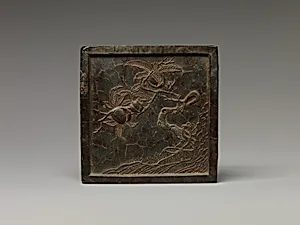
Medium
Black ink
Dimensions
H. 4 in. (10.2 cm); W. 3 7/8 in. (9.8 cm)
Classification
Ink
Culture & Period
China · late Qing dynasty (1644–1911) or early Republic period (1912–49)
Department
Asian Art
Museum
Metropolitan Museum of Art, New York, NY
Credit
Rogers Fund, 1930
Accession Number
30.76.197
Rights
Public Domain
Tags
Art Historical Context
Nestled in the Asian Art collection of the Metropolitan Museum of, this petite *Ink Tablet with Peach Tree* (late 19th–early 20th century) exemplifies the refined artistry of late Qing dynasty (1644–1911) or early Republic period (2–49) China. Crafted from black ink and measuring just 4 by 3⅞ inches, this ink cake—used for calligraphy and painting—was both a practical tool and a collector's treasure. Its delicate depiction of a peach tree, rendered through intricate carving or molding, captures the branch's graceful curves and blooming fruit in exquisite detail. In Chinese culture, peaches hold profound symbolism as emblems of immortality, longevity, and prosperity, often linked to the mythical Queen Mother of the West. Produced during a time of imperial decline and republican transition, such ink tablets reflected lingering literati traditions amid social upheaval. Artisans employed precise techniques to embed motifs into the solid ink block, which, when ground with water on an inkstone, released a rich, velvety black for brushwork. This anonymous masterpiece highlights the fusion of utility and aesthetics in Chinese scholarly objects, inviting visitors to ponder how everyday tools embodied poetic ideals of nature's enduring beauty. Acquired through the Rogers Fund in 1930, it offers a tangible glimpse into an era's cultural elegance.