
Inkstand
Unknown Artist
1800
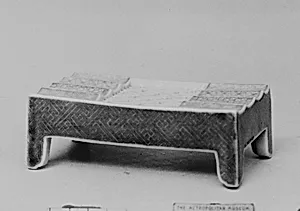
Medium
Porcelain decorated in blue under the glaze; the top pierced (Arita ware, Imari type)
Dimensions
H. 1 in. (2.5 cm); W. 1 3/4 in. (4.4 cm); L. 3 in. (7.6 cm)
Classification
Ceramics
Culture & Period
Japan · Edo period (1615–1868)
Department
Asian Art
Museum
Metropolitan Museum of Art, New York, NY
Credit
Gift of Mrs. V. Everit Macy, 1923
Accession Number
23.225.172
Rights
Public Domain
Art Historical Context
This delicate inkstand, crafted around 1800 during Japan's Edo period (16151868), exemplifies the porcelain artistry of Arita ware from the Imari kilns in Saga Prefecture. Measuring just 1 inch high, 1¾ inches wide, and 3 inches long its petite scale belies its functional elegance as a holder for ink, likely used in calligraphy or scholarly pursuits. The porcelain is decorated in vibrant blue under the glaze—a technique where cobalt pigment is applied before firing, ensuring colors remain vivid and unfading—while the pierced top allowed ink to breathe without spilling, showcasing clever design ingenuity. Arita wares, pioneered in the early 17th century after porcelain production techniques were imported from Korea, became synonymous with Japan's export porcelain trade, gracing European tables and cabinets. The Imari style, named after the port of Imari from which these pieces shipped abroad, often featured bold blue motifs on white grounds, blending Japanese aesthetics with global appeal. This inkstand reflects the Edo era's cultural flourishing, when peace and prosperity fueled refined domestic objects amid ukiyo-e woodblock prints and kabuki theater. Though by an unknown artist, such everyday luxuries highlight Japan's mastery of ceramics, bridging utility and beauty. Gifted to the Metropolitan Museum of Art in 1923 by Mrs. V. Everit Macy, it invites visitors to ponder the quiet artistry of daily life in historic Japan.