
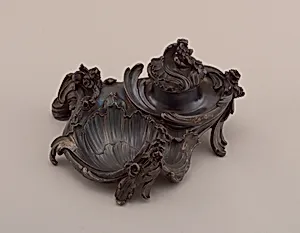
Inkstand
mid- 19th century
Classification
metalwork
Department
Smithsonian Collection
Museum
Smithsonian American Art Museum
Credit
Gift of Eleanor Garnier Hewitt
Accession Number
1931-65-6-a,b
Rights
Public Domain
About this artwork
Research in Progress
Art Historical Context
Nestled in the Smithsonian American Art Museum's collection, this elegant *Inkstand* by French artisan Paul Sormani (1817–ca. 1877) exemplifies the exquisite metalwork of mid-19th-century Europe. Crafted during a golden age of decorative arts under France's Second Empire, inkstands like this were prized desk accessories for the elite—functional yet luxurious vessels for ink, quills, and seals, symbolizing refined taste and intellectual pursuits. Sormani, a master Parisian cabinetmaker and bronzier, was renowned for his intricate, historically inspired designs that revived opulent styles like Louis XV and XVI, blending functionality with sculptural beauty. Though the precise medium awaits further research, its classification as metalwork suggests masterful techniques such as casting, chasing, or gilding, hallmarks of French luxury goods that showcased silversmiths' and bronze-founders' precision. These objects not only served practical needs in an era before fountain pens but also reflected the era's fascination with historicism and technical virtuosity, bridging utility and high art. A generous gift from Eleanor Garnier Hewitt, this piece invites us to ponder the global exchange of craftsmanship that enriched American collections. As research progresses, it promises deeper insights into Sormani's innovative legacy.