
Inkwell
1815–41
Medium
Blown-molded glass
Dimensions
H. 1 3/8 in. (3.5 cm); Diam. 2 1/8 in. (5.4 cm)
Classification
Inkwell
Culture
American
Department
The American Wing
Museum
Metropolitan Museum of Art, New York, NY
Credit
Gift of Charles M. Baldwin, 1915
Accession Number
15.79.5
Rights
Public Domain
Art Historical Context
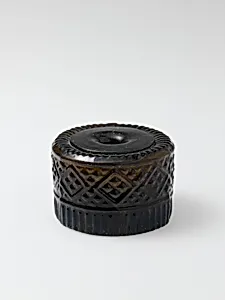
Nestled in The American Wing of the Metropolitan of Art, this petite inkwell from Keene Glass Works (5–41) exemplifies early 19th-century American ingenuity in glassmaking. Crafted from blown-molded glass, it just 1⅜ inches tall with a 2⅛-inch diameter, perfect for a desk or writing table in a growing nation's households. Gifted to the Met in 1915 by Charles M Baldwin, it captures the elegance of everyday objects elevated to art. The blown-molded technique was revolutionary for its time, allowing artisans to blow molten glass into patterned molds for consistent, decorative shapes at scale—far more efficient than free-blowing. Keene Glass Works, based in New Hampshire, was a key player in America's burgeoning glass industry, producing affordable wares that rivaled European imports amid post-Revolutionary economic expansion. This method enabled intricate designs while keeping costs low, democratizing beauty for middle-class homes. As a window into antebellum American life, the inkwell reflects the era's emphasis on self-sufficiency and refinement. Writers, clerks, and families relied on such unassuming tools for correspondence and record-keeping, blending utility with subtle artistry in a young republic's material culture.