
Inlay
Unknown Artist
ca. 2900–2350 BCE
Medium
Shell
Dimensions
1.65 x 1.46 x 0.16 in. (4.19 x 3.71 x 0.41 cm)
Classification
Shell-Ornaments
Culture & Period
Sumerian · Early Dynastic
Department
Ancient Near Eastern Art
Museum
Metropolitan Museum of Art, New York, NY
Credit
Rogers Fund, 1959
Accession Number
59.41.52
Rights
Public Domain
Art Historical Context
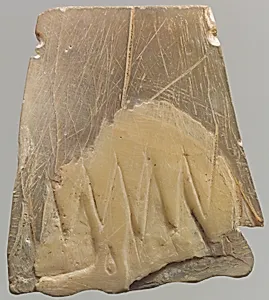
This delicate shell inlay, crafted by an unknown Sumerian artist around 2900–2350 BCE during the Early Dynastic period, offers a glimpse into one of the world's earliest urban civilizations in ancient Mesopotamia. Hailing from the fertile cradle of Sumer—home to pioneering city-states like Ur anduk—this tiny ornament (just 1.65 x 1.46 x 0.16 inches) the period's artistic sophistication. The Early Dynastic era marked a time of prosperity, with advancements in writing, architecture, and trade that fueled exquisite decorative arts. Made from shell, likely sourced through long-distance exchange from coastal regions, the inlay showcases masterful carving techniques. Sumerian artisans expertly shaped and polished these thin, luminous pieces to fit into mosaics adorning furniture, musical instruments like lyres, or even architectural elements. Shell's iridescent quality provided striking contrast when paired with materials like lapis lazuli or bitumen, creating vibrant scenes of mythology, banquets, or daily life that celebrated royal power and divine favor. Today, housed in the Metropolitan Museum of Art's Ancient Near Eastern Art department (acquired via the Rogers Fund in 1959), this unassuming artifact highlights Sumer's legacy of precision craftsmanship. Though small, it whispers of a culture that laid foundations for millennia of artistic innovation, inviting us to marvel at the ingenuity of hands from over 4,500 years ago.