
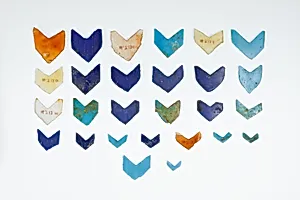
Inlay, chevron
Unknown Artist
ca. 1550–1295 B.C.
Medium
Glass
Dimensions
H. 1.6 × W. 1.9 cm (5/8 × 3/4 in.)
Classification
Inlay, chevron
Period
New Kingdom
Department
Egyptian Art
Museum
Metropolitan Museum of Art, New York, NY
Credit
Gift of Bashford Dean, 1916
Accession Number
16.7.13k
Rights
Public Domain
Art Historical Context
This delicate glass inlay, featuring a bold chevron pattern, hails from Egypt's New Kingdom, specifically Dynasty 18 (ca. 1550–1295 B.C.), a golden age of imperial power and artistic innovation under pharaohs like Those III and Amenhotep III. Measuring just 1.6 by 1.9 cm, this tiny artifact—likely part of jewelry, furniture, or ceremonial objects—exemplifies the era's obsession with intricate decoration that conveyed status and divine order. Ancient Egyptians were pioneers in glassmaking, developing it around 1500 B.C. as a luxurious alternative to precious stones. Crafted through sophisticated techniques like core-forming (winding molten glass around a removable core) or molding, then precisely cut and polished, this inlay showcases their mastery of color and translucency. The repeating zigzag chevron motif, a timeless geometric design, added dynamic energy to composite surfaces, blending functionality with aesthetic brilliance. A gift to the Metropolitan Museum of Art from Bashford Dean in 1916, this piece invites us to marvel at New Kingdom artisans' skill, where even the smallest objects reflected a civilization's technological and cultural splendor.