
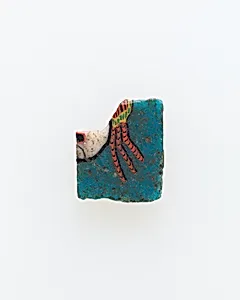
Inlay, fragment, maenad hair
Unknown Artist
100 BC–100 AD
Medium
Glass
Dimensions
H. 1.8 × W. 1.5 cm (11/16 × 9/16 in.)
Classification
Inlay, fragment, maenad hair
Period
Ptolemaic Period–Roman Period
Department
Egyptian Art
Museum
Metropolitan Museum of Art, New York, NY
Credit
Gift of Helen Miller Gould, 1910
Accession Number
10.130.2705
Rights
Public Domain
Art Historical Context
This delicate glass inlay fragment, depicting the flowing hair of a maen, offers a glimpse into the vibrant cultural fusion of Ptolemaic-Roman Egypt (100 BC–100 AD). just 1.8 × 1.5 cm, it likely adorned jewelry, furniture, or a decorative object showcasing the Hellenistic influences that flourished after Alexander the Great's conquest. Maenads, the ecstatic female followers of Dionysus (cretized with Egyptian Osiris), symbolized wild revelry and divine frenzy—motifs that bridged Greek mythology with local traditions in this cosmopolitan era. Crafted in glass, a medium Egypt excelled in since the New Kingdom, the fragment highlights advanced techniques like millefiori or segmented molding, allowing for intricate, colorful details in miniature scale. Such inlays were prized for their jewel-like translucency, mimicking precious stones while making art accessible to elites. Now at the Metropolitan Museum of Art, thanks to a 1910 gift from Helen Miller Gould, this tiny survivor underscores Egypt's role as a crossroads of empires, where Roman patronage amplified Greco-Egyptian artistry. Imagine it once catching the light amid a maenad's dance— a whisper of ancient ecstasy preserved in glass.