
冨士形蒔絵印籠|Inrō in the Shape of Mount Fuji with a Crossing Ferry and Procession
late 18th–early 19th century
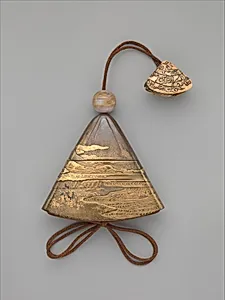
Medium
Two cases; lacquered wood with gold and silver takamaki-e, hiramaki-e, togidashimaki-e, cut-out gold foil on nashiji lacquer ground Netsuke: ivory; Ryūgūjō (The Dragon King's undersea palace) in a clam Ojime: agate bead
Dimensions
4 1/8 x 4 11/16 x 1 1/4 in. (10.5 x 11.9 x 3.2 cm)
Classification
Inrō
Culture & Period
Japan · Edo period (1615–1868)
Department
Asian Art
Museum
Metropolitan Museum of Art, New York, NY
Credit
Rogers Fund, 1913
Accession Number
13.67.93
Tags
Art Historical Context
This exquisite *Inrō in the Shape of Mount Fuji a Crossing Ferry and Process*, from Japan's Edo period (late 18th–early 19th century), exemplifies the refined artistry of lacquerware masters attributed to Hanabusachō and the Kajikawa workshop. Shaped like the iconic Mount Fuji, the two-case inrō depicts a lively ferry crossing with a procession, evoking the bustling travel and reverence for Japan's sacred peak during a time of relative peace and cultural flourishing. Crafted from lacquered wood, it masterful maki-e techniques: gold and silver *takamaki-e* (raised sprinkled lacquer) for dimens...
About the Artist
Hanabusa Itchō|Kajikawa · 1652–1724
Japanese, 1652–1724