
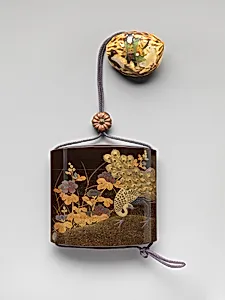
古満安匡作 孔雀蒔絵印籠|Inrō with Peacocks and Flowers
19th century
Medium
Black lacquer and nashiji ground with gold and silver iroe togidashi and hiramaki-e Netsuke: Kintarō with forest animals on peach stone; ivory, mother-of-pearl, tortoise shell Ojime: melon; red bronze with iron and gilding
Dimensions
3 x 3 1/8 x 13/16 in. (7.6 x 7.9 x 2 cm)
Classification
Inrō
Culture & Period
Japan · Edo period (1615–1868)
Department
Asian Art
Museum
Metropolitan Museum of Art, New York, NY
Credit
The Howard Mansfield Collection, Purchase, Rogers Fund, 1936
Accession Number
36.100.241
Rights
Public Domain
Tags
Art Historical Context
This exquisite inrō, crafted by the lacquer artist Koma Yasutada in 19th-century Japan, exemplifies the refined artistry of the late Edo period. Inrō served as elegant, portable cases for seals, medicines, or small personal items, suspended from a sash by a cord secured with a netsuke toggle and ojime bead. The compact form—measuring just over three inches tall—reflects the sophisticated urban culture of Edo Japan, where such accessories combined utility with status and aesthetic pleasure. Yasutada employed masterful maki-e techniques, layering black lacquer over a shimmering nashiji (pear-skin) ground and applying gold and silver powders through hiramaki-e and togidashi methods to create the vibrant peacock and floral motifs. These intricate designs evoke themes of beauty, longevity, and nature’s splendor. The accompanying netsuke, carved from peach stone and inlaid with ivory, mother-of-pearl, and tortoise shell to depict the folk hero Kintarō among forest creatures, adds narrative charm, while the red-bronze ojime shaped like a melon completes the harmonious ensemble. Housed in the Metropolitan Museum of Art’s Asian Art collection, this piece highlights Japan’s enduring tradition of transforming everyday objects into miniature masterpieces.