
寒山拾得蒔絵印籠|Inrō with Rinpa Style Kanzan and Jittoku
Ogata Kōrin, first half of the 19th century
About this artwork
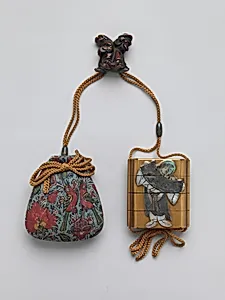
This exquisite *Inrō with Rinpa Style Kanz and Jittoku*, to Ogata Kōrin's influential workshop in the first half of the19th century, exemplifies pinnacle of Edo-period Japanese lacquer artistry. Crafted from three lacquered wood cases (measuring just 5.5 cm high), it served as a portable carrying case for seals, medicines, or tobacco—suspended from a kimono sash via a cord, secured by an ojime bead and paired with a printed cotton pouch featuring vibrant sarasa patterns. Part of the Metropolitan Museum of Art's H.O. Havemeyer Collection, it reflects the refined tastes of samurai and merchant classes during Japan's peaceful Edo era (1615–1868). The artwork showcases Rinpa style, Kōrin's signature decorative movement known for its bold, asymmetrical compositions inspired by nature and classical poetry. Kanzan (Cold Mountain) and Jittoku (Picked Up), legendary Zen monk-poets symbolizing enlightened eccentricity, are rendered in intricate maki-e (sprinkled gold powder) technique on a shimmering gold lacquer ground. Mother-of-pearl and pewter inlays add luminous depth to motifs of men, birds, and flowers, evoking poetic harmony between humans and nature. Culturally, inrō were status symbols blending functionality with artistry, their diminutive scale demanding masterful precision. This piece captures Rinpa's enduring legacy, bridging 17th-century innovation with 19th-century refinement, inviting viewers to ponder Zen wisdom in everyday elegance.