
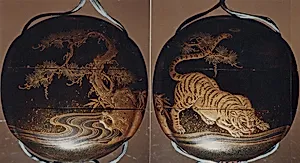
虎蒔絵印籠 銘近秀|Inrō with Tiger Drinking from a River beside Rocks and Pine Tree
Unknown Artist
early 19th century
Medium
Two cases; lacquered wood with gold and silver togidashimaki-e, hiramaki-e, takamaki-e, cut-out gold foil application on black ground Netsuke: bat; carved walrus ivory Ojime: coral bead
Dimensions
2 1/2 x 2 1/2 x 15/16 in. (6.4 x 6.4 x 2.4 cm)
Classification
Inrō
Culture & Period
Japan · Edo period (1615–1868)
Department
Asian Art
Museum
Metropolitan Museum of Art, New York, NY
Credit
Rogers Fund, 1913
Accession Number
13.67.11
Rights
Public Domain
Tags
Art Historical Context
This stunning *Inrō with Tiger Drinking from a River beside Rocks and Pine Tree*, signed by the artist Chikashige, dates to the early 19th century during Japan's Edo period (1615–1868). Inrō were elegant portable cases, typically holding medicines or seals, suspended from a kimono sash via a cord secured by an ojime bead and anchored by a netsuke toggle. Worn by samurai and merchants alike, they evolved from practical items into fashionable accessories, reflecting the era's prosperity and love for refined craftsmanship. The two lacquered wood cases feature a black ground alive with a majestic tiger lapping water beside rugged rocks and a sturdy pine tree, rendered in masterful maki-e techniques. These include togidashimaki-e (burnished for subtle sheen), hiramaki-e (flat sprinkled gold/silver powder), and takamaki-e (raised designs), enhanced by intricate cut-out gold foil. A carved walrus ivory netsuke shaped as a bat and a vibrant coral ojime complete the ensemble, measuring just 2½ x 2½ x 15/16 inches—perfect for daily carry. In Edo Japan, such inrō exemplified lacquerware's pinnacle, blending functionality with artistry. Tigers evoked power and protection, while pines symbolized longevity, making this piece a cultural treasure now at the Metropolitan Museum of Art, acquired through the Rogers Fund in 1913.