
Inscribed Pen Box
Unknown Artist
made in early–late 14th century; altered shortly before mid-15th century
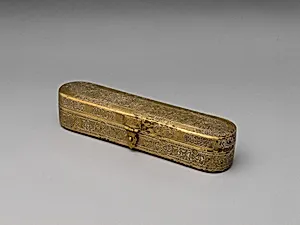
Medium
Brass; engraved and inlaid with silver, gold, and black compound
Dimensions
L. 11 1/2 in. (29.2 cm) H. 2 3/8 in. (6 cm) W. 2 1/2 in. (6.4 cm)
Classification
Metal
Department
Islamic Art
Museum
Metropolitan Museum of Art, New York, NY
Credit
Edward C. Moore Collection, Bequest of Edward C. Moore, 1891
Accession Number
91.1.536
Rights
Public Domain
Tags
Art Historical Context
This exquisite *Inscribed Pen Box* the Islamic world, crafted in brass during the early to late 14th century and altered just before the mid-15 century, served as a portable case for pens—essential tools for scholars, calligraphers, and administrators in a culture that revered writing and knowledge. Measuring a compact 11½ inches long, it reflects the refined metalworking traditions of the Mamluk, likely from Egypt or Syria, where such objects blended utility with luxury. The box's surface is masterfully engraved and inlaid with silver, gold, and a black compound, creating shimmering contrasts and intricate designs that highlight its inscriptions—possibly Qur'anic verses, poetry, or dedicatory phrases common in Islamic art. This technique, known as damascening or taziya, demanded exceptional skill, turning a functional writing implement into a status symbol that showcased the owner's piety and sophistication. Now part of the Metropolitan Museum of Art's Edward C. Moore Collection, this pen box offers a glimpse into the vibrant intellectual life of medieval Islam, where beauty elevated everyday objects. Its later modifications suggest it was cherished and adapted over time, bridging centuries of cultural continuity.