
Insertion
Unknown Artist
18th century
Medium
Bobbin lace
Dimensions
L. 10 1/2 x W. 1 inches (26.7 x 2.5 cm)
Classification
Textiles-Laces
Culture
Scottish, Hamilton
Department
European Sculpture and Decorative Arts
Museum
Metropolitan Museum of Art, New York, NY
Credit
Gift of Miss Margaret Taylor Johnstone, 1906
Accession Number
06.539
Rights
Public Domain
Art Historical Context
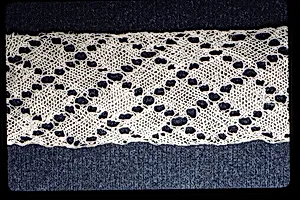
Step into the intricate world of 18th Scottish lace-making with *Insertion*, a slender strip of bobbin lace crafted by an unknown artist from, Scotland. Measuring just 10½ by 1 inches (26.7 x 2.5 cm), this delicate piece exemplifies the precision and patience required in bobbin lace technique. Threads are wound onto small bobbins and meticulously twisted, braided, and pinned over a patterned pillow, creating a durable yet exquisitely fine textile ideal for insertions—narrow bands sewn between fabric edges to embellish garments, linens, or furnishings. In the 1700s, lace like this was a coveted luxury, symbolizing wealth and craftsmanship amid Scotland's vibrant textile traditions. Hamilton, in Lanarkshire, was a hub for such artisanal work, where skilled women produced pieces blending local motifs with continental influences. Bobbin lace's resilience set it apart from fragile needle laces, making it prized for everyday elegance in European decorative arts. Generously gifted to the Metropolitan Museum of Art in 1906 by Miss Margaret Taylor Johnstone, *Insertion* invites us to appreciate the anonymous hands behind these timeless treasures, preserving a slice of Scotland's cultural heritage in our collection of European Sculpture and Decorative Arts.