
Insertion
Unknown Artist
16th century
Medium
Bobbin lace
Dimensions
L. 36 x W. 2 inches (91.4 x 5.1 cm)
Classification
Textiles-Laces
Culture
Italian
Department
European Sculpture and Decorative Arts
Museum
Metropolitan Museum of Art, New York, NY
Credit
Rogers Fund, 1920
Accession Number
20.186.4
Rights
Public Domain
Art Historical Context
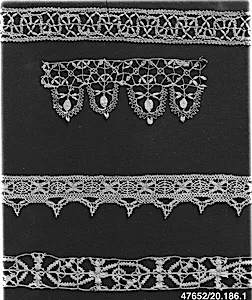
Step into the refined world of Renaissance Italy with *Insertion*, a exquisite example of 16th-century bobbin lace. Crafted by an unknown artist, this narrow strip measures 36 inches long and just 2 inches wide, designed as an insertion—a versatile lace band meant to adorn seams, cuffs, or collars on luxurious garments. Acquired through the Rogers Fund in 1920, it now graces the Metropolitan Museum of Art's European Sculpture and Decorative Arts collection, highlighting Italy's mastery in textile arts. Bobbin lace, the medium here, emerged in Europe during the late 15th and 16th centuries, with Italy as a vibrant hub alongside Flanders. Artisans used small wooden bobbins to twist and intertwine fine linen threads into intricate, geometric patterns, creating a durable yet delicate fabric. This technique demanded exceptional patience and precision, often passed down through workshops or convents, and symbolized wealth and status among the elite. *Insertion* embodies the cultural zenith of lace-making in Renaissance fashion, where such pieces elevated everyday attire into statements of sophistication. Its survival speaks to the enduring allure of Italian craftsmanship, offering visitors a tactile glimpse into a time when thread became high art.