
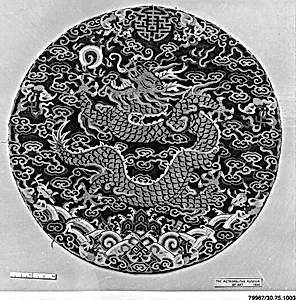
Insignia Medallion
Unknown Artist
19th century
Medium
Silk
Dimensions
12 1/4 x 12 1/4 in. (31.11 x 31.11 cm)
Classification
Textiles-Tapestries
Culture & Period
China · Qing dynasty (1644–1911)
Department
Asian Art
Museum
Metropolitan Museum of Art, New York, NY
Credit
Bequest of William Christian Paul, 1929
Accession Number
30.75.1003
Rights
Public Domain
Tags
Art Historical Context
This exquisite *Insignia Medallion a 12¼ × 12¼-inch square of silk from China's Qing dynasty (16441911), showcases the era's masterful textile artistry. Produced in the 19th century it belongs to the Metropolitan Museum of Art's Asian Art collection, thanks to the 1929 bequest of Christian Paul. Classified as a textile-tapestry, its intricate design likely features dragon motifs—powerful symbols in Chinese imperial culture—woven or embroidered with precision on luxurious silk, a material prized for its sheen and durability. In Qing society, such medallions were essential components of official robes, sewn onto the chest to signify the wearer's rank within the imperial bureaucracy. Dragons, often depicted with five claws for the emperor or fewer for nobles, embodied imperial authority, strength, and auspiciousness, reflecting the dynasty's hierarchical Confucian order and Manchu influences. The medallion's craftsmanship highlights advanced weaving and embroidery techniques, where silk threads created vibrant, symbolic patterns meant to impress and intimidate. Though by an unknown artist, it exemplifies the Qing court's opulent aesthetic, bridging art and politics in everyday imperial splendor. A fascinating glimpse into China's gilded past!