
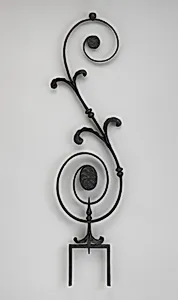
Iron baluster
Unknown Artist
ca. 1770
Medium
Wrought iron
Dimensions
wt. confirmed: 39 × 9 5/8 in., 8.5 lb. (99.1 × 24.4 cm, 3.9 kg)
Classification
Metalwork-Iron
Culture
British
Department
European Sculpture and Decorative Arts
Museum
Metropolitan Museum of Art, New York, NY
Credit
Rogers Fund, 1931
Accession Number
31.92.34
Rights
Public Domain
Art Historical Context
Step into the refined world of 18th-century British architecture this elegant wrought iron baluster, to around 1770. Standing at nearly 39 inches tall and weighing just 8.5 pounds, this slender yet sturdy piece once formed part of a grand staircase railing or balcony, adorning the homes of the British elite. Acquired through the Rogers Fund in 1931, it now graces the Metropolitan Museum of Art Department of European Sculpture and Decorative Arts, showcasing the pinnacle of British metalwork. Crafted from wrought iron—a labor-intensive medium forged by heating and hammering the metal into shape—this baluster exemplifies the blacksmith's artistry before the rise of industrial casting techniques. Its lightweight yet durable form (99.1 × 24.4 cm) allowed for intricate designs that balanced strength and ornamentation, making it ideal for architectural embellishment. Wrought iron's malleability enabled fluid curves and delicate details, reflecting the craftsmanship of Georgian-era artisans. In British culture, such balusters symbolized prosperity and sophistication, gracing townhouses and public buildings during a time of expanding colonial wealth and neoclassical tastes. This anonymous masterpiece invites us to appreciate the unsung heroes of decorative arts, where everyday iron transformed into timeless elegance.