
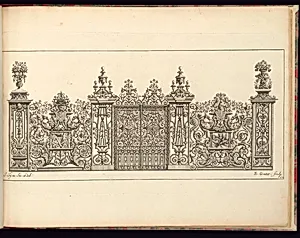
Ironwork Gate and Screen Design
Medium
Classification
Department
Smithsonian Collection
Museum
Smithsonian American Art Museum
Credit
Purchased for the Museum by the Advisory Council
Accession Number
1921-6-410-20
Rights
Public Domain
About this artwork
Research in Progress
Art Historical Context
Step into the ornate world of late 17th-century design with Jean Tijou *Ironwork Gate and Screen Design*1693), a captivating print from the Smithsonian American Art Museum. Tou, a French Huguenot ironworker active 1689 to 1712, fled religious persecution to England, where he became a master of wrought iron craftsmanship. This piece, likely from his influential pattern book *A New Method Drawing Pass-Iron Work showcases his exquisite Baroque designs for grand gates and screens, blending French elegance with English grandeur. As a print—a revolutionary medium for disseminating architectural patterns—this etching allowed artisans across Europe to replicate Tijou's intricate motifs of scrolling foliage, mythical creatures, and asymmetrical flourishes. These designs epitomize the exuberant Baroque style, emphasizing movement and opulence, and were commissioned for royal sites like Hampton Court Palace under William and Mary. Tijou's work bridged craftsmanship and fine art, influencing generations of metalworkers and elevating ironwork to sculptural heights. Purchased for the museum by the Advisory Council, this print invites us to appreciate how a single design could transform estates into statements of power and beauty. (198 words)