
Isaac-Jacques de Verthamon
1651 to 1700
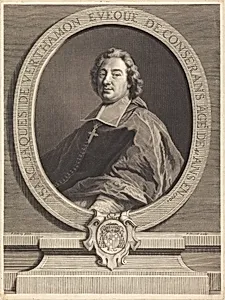
Medium
engraving
Classification
Department
CG-E
Museum
National Gallery of Art, Washington, D.C.
Credit
Ailsa Mellon Bruce Fund
Accession Number
1974.116.69
Rights
Public Domain
Art Historical Context
**Isaac-Jacques de VerthamonThis elegant engraving, titled *Isaac-Jacques de Verthamon was crafted by the acclaimed French engraver Pierre-Im Drevet after an original portrait by François de Troy. Dated between 1651 and1700, it likely depicts the sitter during the lavish era of Louis XIV's France, a time when portraiture celebrated the aristocracy and rising bourgeoisie. De Troy, a master of refined, expressive portraits bridging Baroque grandeur and emerging Rococo lightness, provided the painted source that Drevet meticulously translated into print. Engraving as a medium was revolutionary in the 17th and 18th centuries, enabling the faithful reproduction and widespread dissemination of elite artworks before photography's advent. Drevet's technique—precise burin work creating rich tonal contrasts and lifelike textures—captured de Troy's fluid brushwork, making high art accessible to collectors, scholars, and admirers across Europe. This print exemplifies the collaborative brilliance of painter-engraver partnerships, preserving visual culture for posterity. Now housed in the National Gallery of Art's Prints Department (CG-E), courtesy of the Ailsa Mellon Bruce Fund, *Isaac-Jacques de Verthamon* invites us to ponder the subject's world: a tapestry of courtly ambition, intellectual pursuits, and artistic innovation under the Sun King's reign. A testament to technical virtuosity and historical resonance.