
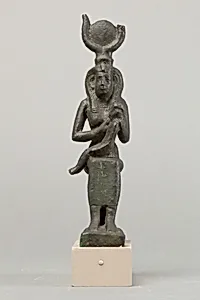
Isis and Horus
Unknown Artist
664–30 B.C.
Medium
Cupreous metal
Dimensions
H. 14 cm (5 1/2 in.); W. 3.7 cm (1 7/16 in.); D. 6.6 cm (2 5/8 in.) H. (with tang): 15.8 cm (6 1/4 in.)
Classification
Statuette, Isis, Horus
Period
Late Period–Ptolemaic Period
Department
Egyptian Art
Museum
Metropolitan Museum of Art, New York, NY
Credit
Gift of Joseph W. Drexel, 1889
Accession Number
89.2.570
Rights
Public Domain
Tags
Art Historical Context
This elegant statuette of Isis nursing her son Horus one of ancient Egypt’s most enduring symbols of maternal protection and divine kingship. Created between 664 and 30 B.C. during the Late and Ptolemaic Periods, the small bronze figure shows the goddess seated with the young Horus on her lap, offering her breast—an intimate gesture that reinforced the pharaoh’s claim to legitimacy as the living embodiment of Horus. Isis, revered as the ideal mother and magician who resurrected her husband Osiris, here embodies the nurturing power that safeguarded both the royal line and the cosmic order. Fashioned from cupreous metal, a durable and affordable alloy favored for votive objects, the piece was likely produced for temple offerings or household devotion. Its modest scale suggests it served a personal rather than monumental purpose, allowing worshippers to carry a tangible reminder of divine care. Even as Greek rulers governed Egypt, such traditional images continued to affirm native religious beliefs, blending continuity with the cultural shifts of the Ptolemaic era. Today in the Metropolitan Museum of Art, the statuette offers visitors a window into the quiet piety of ancient Egyptians. The motif of Isis nursing Horus would later echo in Mediterranean art, influencing representations of motherhood across cultures for centuries to come.