
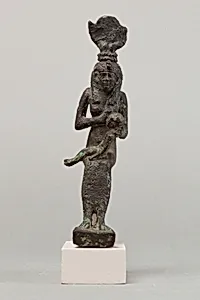
Isis and Horus
Unknown Artist
664–30 B.C.
Medium
Cupreous metal
Dimensions
H. 13.7 cm (5 3/8 in.); W. 3.5 cm (1 3/8 in.); D. 6 cm (2 3/8 in.) H. (with tang): 14.5 cm (5 11/16 in.)
Classification
Statuette, Isis, Horus
Period
Late Period–Ptolemaic Period
Department
Egyptian Art
Museum
Metropolitan Museum of Art, New York, NY
Credit
Gift of Darius Ogden Mills, 1904
Accession Number
04.2.586
Rights
Public Domain
Tags
Art Historical Context
This exquisite small figurine of *Isis and Horus*, from cupreous metal during Egypt's Late Period to Ptolemaic era (664–30 B.C.), captures a timeless image of divine motherhood. Standing just 13.7 cm tall, the goddess Isis is depicted nursing her infant son Horus, protective embrace symbolizing nurturing power and safeguarding against evil. The detailed rendering of their forms—Isis seated with Horus on her lap—highlights the skilled metalworking techniques of ancient Egyptian artisans, likely involving casting or hammering to achieve a durable, lustrous finish suited for ritual use. In Egyptian mythology, Isis embodied magic, healing, and maternal devotion, famously resurrecting her husband Osiris and protecting Horus from his uncle Set's threats. Such amulets or votive figures were cherished by devotees for personal protection, fertility, and warding off harm, reflecting the era's blend of traditional piety and Hellenistic influences under Ptolemaic rule. Placed in homes or tombs, this artifact from the Metropolitan Museum of Art's Egyptian collection offers a poignant glimpse into ancient beliefs in the gods' intimate, human-like bonds, echoing through millennia in art and iconography.