
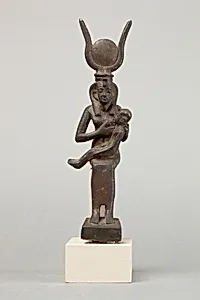
Isis and Horus
Unknown Artist
664–30 B.C.
Medium
Cupreous metal
Dimensions
H. 16.5 cm (6 1/2 in.); W. 4.9 cm (1 15/16 in.); D. 6.4 cm (2 1/2 in.) H. (with tang): 21.1 cm (8 5/16 in.)
Classification
Statuette, Isis, Horus
Period
Late Period–Ptolemaic Period
Department
Egyptian Art
Museum
Metropolitan Museum of Art, New York, NY
Credit
Gift of Mrs. Frederick F. Thompson, 1915
Accession Number
15.6.1
Rights
Public Domain
Tags
Art Historical Context
This exquisite cupreous metal figurine, titled *Isis and Horus*, dates to Egypt's Late Period through Ptolemaic era (664–30 B.C.), a time when native traditions blended with Greek influences under Ptolemaic rulers. Standing just 16.5 cm tall (21.1 cm with its mounting tang), this small-scale sculpture captures the goddess Isis tenderly nursing her infant son Horus, a motif symbol divine motherhood and protection. Crafted from a copper-based alloy, it exemplifies the skilled metalworking techniques of ancient artisans, who cast such pieces to create durable, portable devotional objects. In Egyptian mythology, Isis was the powerful sorceress who resurrected her husband Osiris and safeguarded Horus from his uncle Seth, making her a beloved protector against evil. These nursing figurines, often worn as amulets, were cherished by mothers and children for warding off harm, reflecting everyday piety during the Ptolemaic Period. The intimate pose highlights Isis's nurturing role, a theme that resonated widely and even echoed in later Mediterranean art. Now housed in the Metropolitan Museum of Art's Egyptian Art Department, thanks to a 1915 gift from Mrs. Frederick F. Thompson, this artifact offers a poignant glimpse into ancient beliefs in maternal divinity and resilience.