
Iskandarnama (Book of Alexander)
1790–91
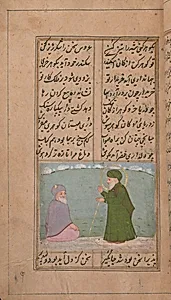
Medium
Ink, opaque watercolor, and gold on paper
Dimensions
H. 9 1/2 in. (24.1 cm) W. 5 3/4 in. (14.6 cm)
Classification
Codices
Department
Islamic Art
Museum
Metropolitan Museum of Art, New York, NY
Credit
Gift of Joseph W. Drexel, 1889
Accession Number
89.2.2154
Rights
Public Domain
Tags
Art Historical Context
Welcome to the Islamic Art galleries, where we encounter the enchanting *Iskandarnama (Book of Alexander)* a lavishly illustrated codex from 1790–91 attributed to the legendary Persian poet Nizami Ganjavi (1141–1209). This compact manuscript, measuring just 9½ by 5¾ inches, forms part of Nizami's epic *Khamsa* (Quintet), recounting the mythical adventures of Iskandar (Alexander the Great) as a wise prophet-king in Islamic lore. Crafted in the late 18th century, likely in a Persianate workshop, it exemplifies the enduring popularity of these tales across centuries. Rendered in ink for precise calligraphy, vibrant opaque watercolors for vivid scenes, and shimmering gold for divine highlights on fine paper, the work showcases the refined techniques of Persian miniature painting. Opaque pigments allowed for jewel-like intensity, while gold illumination elevated the pages to treasures fit for courts. Scenes often feature heroic men in dynamic poses, blending history, legend, and moral philosophy. A generous gift to the Metropolitan Museum of Art from Joseph W. Drexel in 1889, this codex bridges Persian literary tradition with Mughal-influenced artistry, offering visitors a window into how Alexander's exploits inspired Islamic imagination long after his era. Pause here to admire the intricate storytelling frozen in time! (198 words)