
Itinerant Actors
Medium
Hanging scroll; ink and color on paper
Dimensions
Image: 41 7/8 × 18 3/8 in. (106.4 × 46.7 cm) Overall with mounting: 65 7/8 × 23 3/16 in. (167.3 × 58.9 cm) Overall with knobs: 65 7/8 × 25 3/8 in. (167.3 × 64.5 cm)
Classification
Paintings
Culture & Period
Japan · Edo period (1615–1868)
Department
Asian Art
Museum
Metropolitan Museum of Art, New York, NY
Credit
Mary Griggs Burke Collection, Gift of the Mary and Jackson Burke Foundation, 2015
Accession Number
2015.300.124
Rights
Public Domain
Tags
Art Historical Context
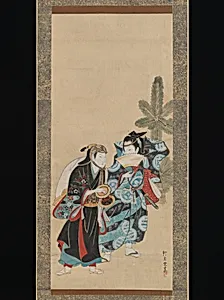
Behold the lively *Itinerant Actors*, captivating hanging scroll by the Japanese artist Kengetsud from Japan's Edo period (16151868). Crafted in ink and color on paper, this work measures an impressive 41 78 × 18 3/8 inches, designed to be unrolled for intimate viewing in a traditional tokonoma alcove. The Edo era, a time of relative peace and urban prosperity, fostered a booming culture of theater and performance, making scenes like this a window into everyday vibrancy. The painting bursts with energy, portraying male actors—likely wandering performers—with fans and drums in hand, evoking the rhythmic pulse of street spectacles or kabuki influences. These itinerant troupes traveled towns, entertaining merchants and commoners alike, blending music, dance, and drama in the "floating world" of ukiyo. Kengetsudō's use of ink and vivid colors brings their dynamic poses and expressive faces to life, highlighting the artistry of Edo genre painting. As part of the Metropolitan Museum of Art's Mary Griggs Burke Collection, this scroll exemplifies how hanging paintings served as cherished heirlooms, celebrating Japan's theatrical heritage. Pause here to imagine the chatter of crowds and beat of drums echoing through Edo streets!