
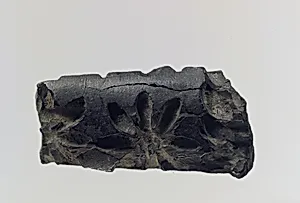
Ivory fragment
Unknown Artist
ca. 9th century BCE
Medium
Ivory
Dimensions
1.38 x 0.63 x 0.43 in. (3.51 x 1.6 x 1.09 cm)
Classification
Ivory/Bone-Ornaments
Culture & Period
Iran · Iron Age II, Hasanlu Period IV
Department
Ancient Near Eastern Art
Museum
Metropolitan Museum of Art, New York, NY
Credit
Anonymous Gift, 1969
Accession Number
69.65
Rights
Public Domain
Art Historical Context
This delicate ivory fragment, dating to around the 9th century BCE, hails from Iron Age II in ancient Iran, specifically the Hasanlu Period IV. Discovered at the archaeological site of Hasanlu in northwestern Iran, it exemplifies the exquisite craftsmanship of a vibrant pre-Achaemenid culture. Measuring just 1.38 x 0.63 x 0.43 inches, its diminutive size suggests it was part of a personal ornament, such as jewelry, a furniture inlay, or a ritual object—common uses for ivory in the Ancient Near East. Ivory, sourced from elephant tusks traded across vast networks, was a luxury material symbolizing wealth and status. Artisans skillfully carved it into intricate forms, often depicting mythical creatures or daily scenes, blending local Iranian motifs with influences from neighboring powers like Assyria and Urartu. This fragment's survival offers a rare glimpse into the artistic sophistication and cultural exchanges of Hasanlu, a bustling center abruptly destroyed by fire around this time, preserving its treasures. Today, housed in the Metropolitan Museum of Art's Department of Ancient Near Eastern Art through an anonymous gift in 1969, it invites us to ponder the lives of Iron Age Iranians—skilled, connected, and artistically bold.