
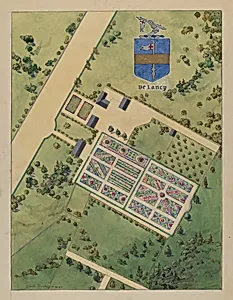
J. Delancey Estate
c. 1936
Medium
watercolor, gouache, and graphite on paperboard
Dimensions
overall: 51.7 x 37.8 cm (20 3/8 x 14 7/8 in.)
Classification
Index of American Design
Department
CG-W
Museum
National Gallery of Art, Washington, D.C.
Credit
Index of American Design
Accession Number
1943.8.10525
Rights
Public Domain
Art Historical Context
**J. Delancey Estate**, created around 1936 by artist Gilbert Sackerman, is a captivating watercolor, gouache, and graphite rendering on paperboard, measuring 51.7 x 37.8 cm. This detailed depiction likely captures the architectural elegance of the J. Delancey Estate, showcasing American design through precise lines and vibrant color washes. Sackerman's use of gouache—an opaque watercolor—adds depth and luminosity, while graphite sketches provide intricate structural outlines, making it a fine example of documentary art from the era. As part of the *Index of American Design* (IAD), a monumental Federal Art Project under the Works Progress Administration (WPA) from 1935 to 1942, this work holds profound historical significance. During the Great Depression, over 400 artists produced more than 15,000 such renderings to document and celebrate everyday American crafts, architecture, and decorative arts—from folk objects to modern designs. Housed in the National Gallery of Art's collection, it preserves a slice of 1930s cultural heritage, highlighting regional estates as symbols of prosperity and ingenuity. The mixed media technique reflects the IAD's emphasis on accuracy and artistry, blending technical precision with aesthetic appeal. For visitors, it offers a window into America's design legacy, reminding us how public programs fostered creativity amid hardship.
About the Artist
Gilbert Sackerman · 1855–present
Gilbert Sackerman is an artist about whom very little biographical information has been preserved. His dates of birth and death are unknown, and his national or regional origin has not been firmly established through surviving records. Sackerman's presence in museum collections attests to a working artistic life, but the details of his training, his influences, and the communities in which he wor...