
Jaguar Pendant
Unknown Artist
11th–16th century
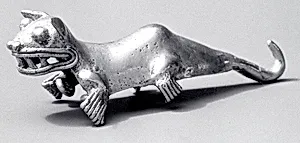
Medium
Gold
Dimensions
H. 1 1/4 x W. 1 3/8 x D. 4 in. (3.2 x 3.5 x 10.2 cm)
Classification
Metal-Ornaments
Culture
Veraguas
Department
Arts of Africa, Oceania, and the Americas
Museum
Metropolitan Museum of Art, New York, NY
Credit
The Michael C. Rockefeller Memorial Collection, Bequest of Nelson A. Rockefeller, 1979
Accession Number
1979.206.911
Rights
Public Domain
Tags
Art Historical Context
This exquisite Jaguar Pendant, crafted by an unknown Veraguas artist between the 11th and 16th centuries, exemplifies the masterful goldworking of pre-Columbian Panama. Measuring just 1 1/4 inches high, 1 3/8 inches wide, and inches deep, this delicate ornament likely served as personal jewelry or a ritual object. The Veraguas culture, from region now known as Panama's Veraguas province, some of the finest gold artifacts in the Americas, often featuring animal motifs that bridged the human and spiritual worlds. Gold held profound cultural significance for the Veraguas people, symbolizing wealth, status, and divine power. The jaguar, a recurring tag in this piece, embodied ferocity, shamanic transformation, and nocturnal mystery in indigenous cosmologies—qualities revered across Mesoamerica and lower Central America. Artisans employed advanced techniques like lost-wax casting to sculpt intricate details, from the predator's snarling jaws to its lithe form, showcasing technical sophistication without modern tools. Today, this treasure resides in the Metropolitan Museum of Art's Arts of Africa, Oceania, and the Americas department, part of The Michael C. Rockefeller Memorial Collection (1979). It invites visitors to marvel at how ancient Veraguas goldsmiths transformed humble metal into eternal symbols of strength and reverence.