
James Monroe
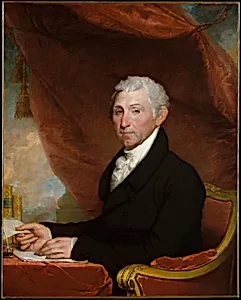
Gilbert Stuart, ca. 1820–22
About this artwork
Gilbert Stuart's portrait of James Monroe, painted around 1820–22 during the president's second term, captures the fifth U.S. president with the dignified gravitas of early American leadership. Commissioned by gallerist John Doggett part of a prestigious series depicting the nation's first five presidents, this oil on canvas work—now in the Metropolitan Museum of Art's American Wing—exemplifies Stuart's mastery of portraiture. Monroe, a Virginian and protégé of Thomas Jefferson, is shown in a classic three-quarter pose at a strewn with books and papers,oking the intellectual weight of his office. Stuart's technique shines through his signature elements: billowing drapery for dramatic depth, bold strokes of pure red to convey statesmanship, and a keen eye for both physical likeness and inner character. Trained in Philadelphia and influenced by European traditions, Stuart forged a distinctly American style that blended sophistication with republican ideals, making this 40¼ × 32-inch canvas a pivotal artistic achievement. Completed just before Monroe's landmark 1823 Doctrine, the painting serves as both a historical document and cultural icon, immortalizing a pivotal era in the young republic's history through Stuart's brilliant brushwork.