
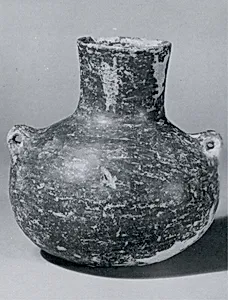
Jar
Unknown Artist
ca. 6000–5400 BCE
Medium
Ceramic
Dimensions
6.06 x 5.91 in. (15.39 x 15.01 cm)
Classification
Ceramics-Vessels
Culture & Period
Hacilar · Early–Middle Chalcolithic
Department
Ancient Near Eastern Art
Museum
Metropolitan Museum of Art, New York, NY
Credit
Anonymous Gift, 1964
Accession Number
64.286.2
Rights
Public Domain
Art Historical Context
This delicate ceramic jar, crafted by an unknown artist from the Hacilar culture around 6000–5400 BCE, offers a glimpse into one of the earliest chapters of human pottery-making in Anatolia (modern-day Turkey). Dating to the Early–Middle Chalcolithic period—a transitional era between the Neolithic and the Bronze Age—this vessel hails from the ancient settlement of Hacilar, a key site renowned for its pioneering ceramic traditions. Standing just over 6 inches tall and wide, its modest dimensions suggest it was designed for practical, everyday use, such as storing grains, liquids, or other household goods. The jar's creation marks a significant technological leap: hand-built from fired clay, it exemplifies the sophisticated firing techniques that allowed prehistoric communities to produce durable, watertight containers. In the Ancient Near Eastern world, such ceramics were not mere utilities but cultural artifacts reflecting settled agricultural life and emerging social complexity. Hacilar pottery, often characterized by its earthy tones and simple forms, helped archaeologists trace the spread of farming and craft innovation across the Fertile Crescent. Today, this jar graces the Metropolitan Museum of Art's Ancient Near Eastern Art collection, gifted anonymously in 1964. It invites us to ponder the ingenuity of our ancestors, who transformed raw earth into enduring objects that bridged daily needs and artistic expression.