
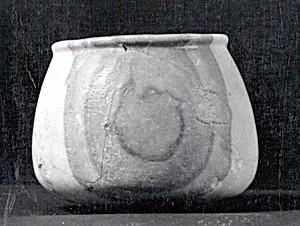
Jar
Unknown Artist
ca. late 8th millennium BCE
Medium
Calcite alabaster
Dimensions
2 1/2 in. (6.4 cm)
Classification
Stone-Vessels
Period
Neolithic
Department
Ancient Near Eastern Art
Museum
Metropolitan Museum of Art, New York, NY
Credit
Gift of Sheldon and Barbara Breitbart, 1985
Accession Number
1985.356.15
Rights
Public Domain
Art Historical Context
This delicate jar, crafted by an unknown artist around the late 8th BCE, offers a glimpse into the Neolithic world of the Ancient Near. Dating to approximately 7000–6000 BCE, it belongs to the early farming era when communities in regions like the Levant and Mesopotamia transitioned from-gatherer lifestyles to settled agriculture. Small stone vessels like this one were essential household items, likely used to store oils, perfumes, or grains, reflecting the dawn of specialized craftsmanship. Made from calcite alabaster—a soft, translucent stone prized its workability— the jar showcases Neolithic techniques of grinding and polishing to achieve smooth surfaces. At just 2½ inches (6.4 cm) tall, its compact form highlights the precision of prehistoric artisans, who quarried this material locally. Alabaster vessels were status symbols, often buried with the dead, underscoring their cultural value beyond utility. Now in the Metropolitan Museum of Art's Ancient Near Eastern Art collection (gift of Sheldon and Barbara Breitbart, 1985), this jar connects us to humanity's inventive roots, bridging the gap between Stone Age survival and artistic expression.