
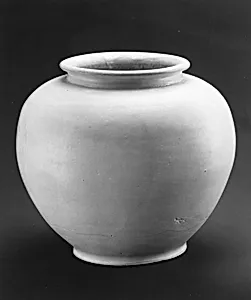
唐 白瓷罐|Jar
Unknown Artist
9th century
Medium
Porcelain with transparent glaze
Dimensions
H. 7 in. (17.8 cm); Diam. 7 3/4 in. (19.7 cm)
Classification
Ceramics
Culture & Period
China · Tang dynasty (618–907)
Department
Asian Art
Museum
Metropolitan Museum of Art, New York, NY
Credit
Gift of Mrs. Richard E. Linburn, 1977
Accession Number
1977.388
Rights
Public Domain
Art Historical Context
This elegant white porcelain jar hails from China's Tang dynasty (618–), a golden age of cultural flourishing, artistic innovation, and international trade along the Silk Road Crafted in the 9th century by unknown artisan, its simple, rounded form—standing just 7 inches tall with a 7¾-inch diameter—exemplifies the period's refined aesthetic. Tang ceramics were prized for their purity and luminosity, reflecting the era's cosmopolitan spirit and advancements in kiln technology. The jar's medium, true porcelain with a transparent glaze, marks a pivotal achievement in Chinese ceramics. Fired at high temperatures in kilns like those at Xing in northern China, the white stoneware body achieves a translucent, ivory-like quality under the clear glaze, which enhances its subtle sheen without decoration. This proto-porcelain technique laid the groundwork for later imperial masterpieces, symbolizing elegance and imperial taste. Jars like this served both practical purposes, such as storing cosmetics or spices, and as status symbols in elite households. Today, this treasure resides in the Metropolitan Museum of Art's Asian Art Department, a gift from Mrs. Richard E. Linburn in 1977. It invites us to appreciate the Tang's masterful blend of form, function, and understated beauty.