
Jar
Unknown Artist
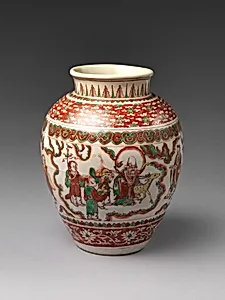
Medium
Porcelain with incised decoration overpainted in polychrome enamels
Dimensions
H. 11 1/2 in. (29.2 cm)
Classification
Ceramics
Culture & Period
China · Ming dynasty (1368–1644), Jiajing mark and period (1522–66)
Department
Asian Art
Museum
Metropolitan Museum of Art, New York, NY
Credit
Gift of Stanley Herzman, in memory of Adele Herzman, 1991
Accession Number
1991.253.59
Rights
Public Domain
Tags
Art Historical Context
This elegant porcelain jar hails from China's Ming dynasty, specifically the Jiajing reign (1522–66), a golden age for imperial ceramics produced at Jingdezhen kilns. Standing at 11½ inches tall, it exemplifies the technical mastery of the era, where potters crafted translucent white porcelain bodies fired at high temperatures for durability and subtle glow. The jar's decoration combines incising—delicate carving into the unfired clay—with overpainting in vibrant polychrome enamels, a sophisticated technique that allowed for rich, layered colors applied in lower-temperature firings. Motifs of men, deer, and flowers adorn its surface, evoking themes of harmony and prosperity: deer symbolize longevity, flowers abundance, and figures perhaps scholars or attendants in leisurely pursuits, reflecting Jiajing-period tastes for auspicious imagery. As a marked imperial piece, this jar highlights the Ming court's patronage of ceramics, blending functionality with artistry for palace use or elite collectors. Gaze closely to appreciate the enamels' jewel-like hues against the porcelain's purity—a testament to centuries-old craftsmanship. (198 words)