
Jar
Unknown Artist
12th–13th century
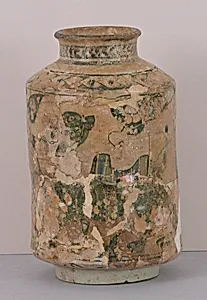
Medium
Stonepaste; underglaze painted
Dimensions
H. 10 7/16 in. (26.5 cm) Max. Diam. 6 5/8 in. (16.8 cm)
Classification
Ceramics
Department
Islamic Art
Museum
Metropolitan Museum of Art, New York, NY
Credit
Rogers Fund, 1915
Accession Number
15.41
Rights
Public Domain
Tags
Art Historical Context
This elegant jar from the 12th–13th century showcases the refined ceramic traditions of the Islamic world. Standing 10 7/16 inches tall with a graceful, slightly tapered form, it was created using stonepaste, a quartz-based material that produced a bright white surface perfect for decoration. The underglaze painting technique allowed artisans to apply intricate designs before covering them with a protective transparent glaze, ensuring the patterns remained vivid through centuries of use. Such vessels were common in daily life for storing liquids, spices, or other goods, yet they also reflected the high artistic standards of medieval Islamic potters. The combination of durable stonepaste and colorful underglaze decoration marked a significant advancement in ceramic technology, enabling more delicate shapes and lasting visual appeal. Acquired by the Metropolitan Museum of Art in 1915 through the Rogers Fund, this piece offers visitors insight into the blend of practicality and beauty that defined Islamic ceramics during this period. Its modest size and elegant proportions highlight how everyday objects could embody sophisticated craftsmanship.