
Jar
Unknown Artist
late 12th–early 13th century
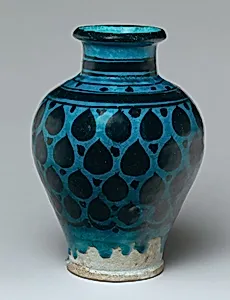
Medium
Stonepaste; painted under transparent turquoise glaze
Dimensions
H. 9 1/8 in. (23.2 cm) Diam. 6 3/4 in. (17.1 cm)
Classification
Ceramics
Department
Islamic Art
Museum
Metropolitan Museum of Art, New York, NY
Credit
H. O. Havemeyer Collection, Bequest of Horace Havemeyer, 1956
Accession Number
56.185.22
Rights
Public Domain
Tags
Art Historical Context
This elegant jar, crafted by an unknown artist in the late 12th to early 13th century, exemplifies refined ceramics of the Islamic world. Standing just over 9 inches tall with a diameter of nearly 7 inches, it served both practical and decorative purposes, likely for precious oils, spices, or perfumes in a bustling medieval household or palace. Housed in the Metropolitan Museum of Art's Islamic Department, it entered the through the renowned H. O. Havemeyer bequest in 1956, highlighting its enduring appeal to collectors. The jar's medium—stonepaste, also known as fritware—represents a pinnacle of Islamic ceramic innovation. Developed in the 9th–10th centuries in regions like Iran and Syria, stonepaste combined quartz, clay, and glass frit to create a durable, white body that mimicked coveted Chinese porcelain, unavailable in the West at the time. Artisans painted intricate designs under a luminous transparent turquoise glaze, a signature hueoking turquoise gems and evoking the opulent courts of the Seljuk era. This technique not only ensured vibrant, enduring colors but also showcased the mastery of kilns reaching over 1,000°C. Culturally, such jars bridged utility and artistry, reflecting Islamic traditions of geometric and floral motifs symbolizing paradise gardens. Though patterns here are subtle, they invite contemplation of daily life in a golden age of craftsmanship, where beauty elevated the everyday.