
Jar
Unknown Artist
16th–17th century
Medium
Stonepaste; underglaze painted
Dimensions
H. 10 1/2 in. (26.7 cm)
Classification
Ceramics
Department
Islamic Art
Museum
Metropolitan Museum of Art, New York, NY
Credit
Gift of J. Pierpont Morgan, 1917
Accession Number
17.190.824
Rights
Public Domain
Art Historical Context
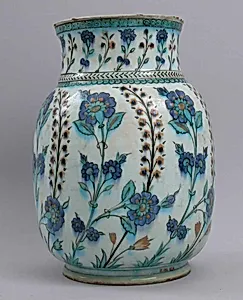
This elegant jar, crafted by an unknown artist in the th–17th century exemplifies the refined ceramics of the Islamic world. Made from stonepaste—a composite material of quartz, clay, and frit developed by Islamic potters to imitate the translucency of Chinese porcelain—it stands just 10½ inches tall, perfect for holding spices, oils, or flowers in a prosperous household. Housed in the Metropolitan Museum of Art's Islamic Art department it was generously gifted by financier J. Pierpont Morgan in 1917, highlighting early 20th-century passion for these treasures. The jar's underglaze painting technique is a hallmark of Islamic ceramic innovation. Pigments were applied directly to the unfired body before a transparent glaze sealed them, then fired at high temperatures for vibrant, durable colors that wouldn't fade. Delicate floral motifs, a recurring theme in Islamic art, adorn its surface, evoking gardens of paradise—a common motif symbolizing abundance and beauty while adhering to aniconic traditions that favored nature over human figures. As a survivor from a golden age of Islamic craftsmanship, this jar offers a window into daily life and artistic excellence across regions like Persia or the Ottoman Empire. Its subtle elegance reminds us how everyday objects became canvases for cultural expression.