
Jar
Unknown Artist
Medium
Porcelain
Dimensions
H. 18 3/4 in. (47.6 cm); Diam. (at rim) 21 5/8 in. (54.9 cm)
Classification
Ceramics
Culture & Period
China · Ming dynasty (1368–1644), Wanli period (1573–1620)
Department
Asian Art
Museum
Metropolitan Museum of Art, New York, NY
Credit
Gift of J. T. Tai, 1970
Accession Number
1970.204
Rights
Public Domain
Tags
Art Historical Context
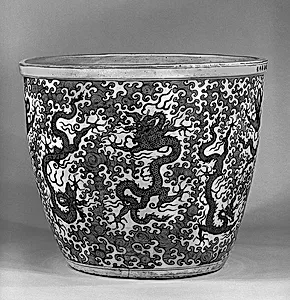
This magnificent porcelain jar hails from China's Ming dynasty, specifically the Wanli period (1573–1620), a golden era for imperial ceramics produced at the famed Jingdezhen kilns. Standing at 18¾ inches tall with an impressively wide rim diameter of 21⅝ inches, it exemplifies the technical mastery of Ming potters, who perfected the translucent, resonant porcelain body fired at high temperatures to achieve its signature white purity and durability. Such large vessels were often crafted for elite use, storage, or display in wealthy households or palaces. The jar's decoration prominently features dragons, powerful symbols of imperial authority, good fortune, and the emperor's divine mandate in Chinese culture. These mythical creatures, typically rendered in vibrant cobalt blue underglaze against the white porcelain, reflect the period's bold underglaze blue-and-white technique—a hallmark of Ming innovation that allowed intricate designs to emerge vividly after glazing and firing. Dragons on ceramics like this one underscored the object's prestige, evoking the grandeur of the Wanli emperor's reign amid expanding global trade, when Chinese porcelain captivated collectors worldwide. Today, this generous gift from J. T. Tai graces the Metropolitan Museum of Art's Asian Art collection, inviting visitors to marvel at the enduring legacy of Ming artistry—where form, function, and symbolism harmonize in timeless elegance.