
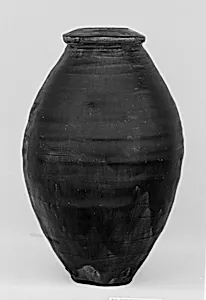
Jar
Unknown Artist
late 18th century
Medium
Pottery covered with glaze (Kyoto ware)
Dimensions
H. 12 in. (30.5 cm); W. 7 in. (17.8 cm)
Classification
Ceramics
Culture & Period
Japan · Edo period (1615–1868)
Department
Asian Art
Museum
Metropolitan Museum of Art, New York, NY
Credit
Edward C. Moore Collection, Bequest of Edward C. Moore, 1891
Accession Number
91.1.313
Rights
Public Domain
Art Historical Context
This elegant jar, crafted in Kyoto ware during Japan's Edo period (1615–1868), exemplifies the pottery traditions of late 18th Kyoto. Standing 12 inches tall and 7 inches wide, it produced during a time of relative peace and prosperity, when urban artisans flourished under the Tokugawa shogunate. Kyoto ware, originating in the 17th century became renowned for its sophisticated glazes applied over fired pottery, often vibrant overglaze enam that captured the aesthetic ideals wabi-sabi—embracing imperfection and natural beauty. The technique of glazing pottery, as seen here, involved multiple firings to achieve durable, lustrous surfaces ideal for both utilitarian and ceremonial purposes. Such jars were commonly used in tea ceremonies (chanoyu), flower arranging (ikebana), or as storage vessels in affluent households, reflecting Edo Japan's vibrant domestic culture and growing merchant class. Kyoto's potters drew inspiration from Chinese and local innovations, blending functionality with artistic expression. Now part of the Metropolitan Museum of Art's Asian Art collection, gifted through the Edward C. Moore bequest in 1891, this anonymous masterpiece highlights the enduring legacy of Japanese ceramics, bridging everyday life and high art.