
Jar
Unknown Artist
early 18th century
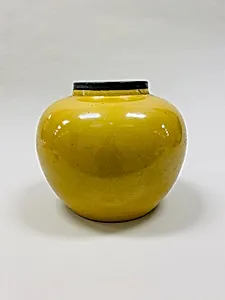
Medium
Porcelain with yellow glaze (Jingdezhen ware), copper mounth rim
Dimensions
H. 7 5/8 in. (19.4 cm); Diam. 9 in. (22.9 cm)
Classification
Ceramics
Culture & Period
China · Qing dynasty (1644–1911), Kangxi period (1662–1722)
Department
Asian Art
Museum
Metropolitan Museum of Art, New York, NY
Credit
Edward C. Moore Collection, Bequest of Edward C. Moore, 1891
Accession Number
91.1.364
Rights
Public Domain
Art Historical Context
This elegant porcelain jar, crafted in early 18th-century China during the Kangxi period (1662–1722) of the Qing dynasty, exemplifies pinnacle of imperial porcelain production at Jingdezhen, the world's center for fine ceramics. Standing just 7⅝ inches tall with a 9-inch diameter, its bulbous form is coated in a vibrant yellow glaze—a color historically reserved for the imperial court, symbolizing the emperor's authority and the sun's auspicious energy. The added copper mount rim, likely a later European adaptation, protected the delicate edge and allowed it to grace 18th-century cabinets or furniture in Western collections. Jingdezhen wares like this were fired in high-temperature dragon kilns using kaolin clay, achieving the translucent, resonant porcelain prized globally. The Kangxi reign marked a golden age for monochrome glazes, blending technical mastery with subtle artistry; yellow examples were rare and luxurious, often produced under strict imperial oversight. This jar reflects China's export trade boom, blending Eastern refinement with Western tastes. A gift to the Metropolitan Museum of Art from the Edward C. Moore Collection in 1891, it invites us to ponder the global journeys of such treasures, bridging dynastic opulence with modern appreciation.