
Jar
Unknown Artist
17th century (?)
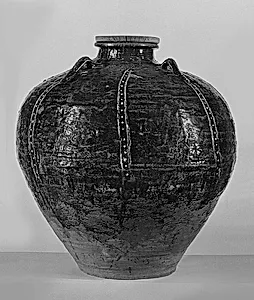
Medium
Pottery; Martaban type
Dimensions
H. 32 1/4 in. (81.9 cm); Diam. at mouth 9 1/8 in. (19.7 cm)
Classification
Ceramics
Culture
China
Department
Asian Art
Museum
Metropolitan Museum of Art, New York, NY
Credit
Gift of Agnes Miles Carpenter, 1954
Accession Number
54.150.1
Rights
Public Domain
Art Historical Context
This impressive Jar, crafted in 17th-century China (circa late Ming or early Qing dynasty), exemplifies the robust Martaban-type pottery renowned for maritime trade across Asia. Standing at an imposing 32¼ inches tall with a mouth diameter of 9⅛ inches, it was designed as a practical storage vessel for commodities like oil, rice, spices. Produced in coastal kilns, these jars were exported via Southeast Asian ports such as Martaban (now Mottama, Myanmar), earning their name and becoming ubiquitous in global commerce from the Indian Ocean to Europe. Martaban wares highlight China's mastery of stoneware ceramics, fired at high temperatures for exceptional durability against long sea voyages. The unglazed, earthy body—typical of this type—resists cracking and leakage, blending utilitarian function with understated aesthetic appeal. Though the artist remains unknown, such jars reflect the era's economic boom, fueled by silver trade with Europe and Japan. Generously gifted to the Metropolitan Museum of Art in 1954 by Agnes Miles Carpenter, this jar now invites visitors to envision the bustling ports and daring traders who carried it across oceans, a testament to China's pivotal role in early modern globalization.