
Jar
Unknown Artist
4th century BCE–4th century CE
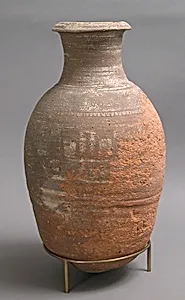
Medium
Earthenware, slip decoration
Dimensions
16 7/8 in. × 9 1/8 in. (42.9 × 23.2 cm) Diam. of rim: 5 1/16 in. (12.9 cm)
Classification
Ceramics
Culture
Coptic
Department
Medieval Art
Museum
Metropolitan Museum of Art, New York, NY
Credit
Rogers Fund, 1925
Accession Number
25.10.20.105
Rights
Public Domain
Art Historical Context
This elegant earthenware jar, crafted by an unknown Coptic artist between the 4th century and 4th century CE, stands as a testament to ancient Egyptian pottery traditions during a transformative era. Measuring 16⅞ inches tall and 9⅛ inches wide, with a rim diameter of just over 5 inches, its practical form suggests use for storage or transport of goods like grains, oils, or water—essentials of daily life in the Nile Valley. The jar's surface features slip decoration, a technique where liquid clay (slip) is applied to the unfired earthenware body to create patterns or motifs before final firing. This method, common in Coptic ceramics, allowed for vibrant, textured designs that highlighted the potter's skill while ensuring durability. Coptic culture, blending pharaonic heritage with emerging Christianity, produced such vessels in monastic and urban workshops, bridging pagan antiquity and early medieval influences. Housed in the Metropolitan Museum of Art's Medieval Art Department (acquired via the Rogers Fund in 1925), this jar offers visitors a tangible link to Coptic Egypt's resilient craftsmanship. Though utilitarian, its survival underscores the artistic value of everyday objects from a world where faith and function intertwined.