
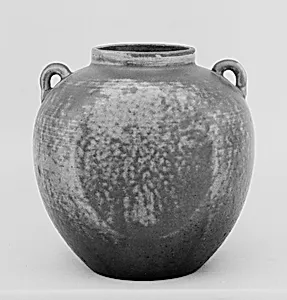
Jar
Unknown Artist
19th century
Medium
Clay covered with a mottled glaze (Shidoro ware)
Dimensions
H. 5 1/8 in. (13 cm)
Classification
Ceramics
Culture & Period
Japan · Edo (1615–1868) or Meiji period (1868–1912)
Department
Asian Art
Museum
Metropolitan Museum of Art, New York, NY
Credit
Gift of Mr. and Mrs. Samuel Colman, 1893
Accession Number
93.1.144
Rights
Public Domain
Art Historical Context
This delicate jar, crafted in 19th-century Japan during the late Edo (1615–1868) or early Meiji (1868–1912) period, the refined artistry of Shidoro ceramics. Standing just 5⅛ inches (13 cm) tall, it is formed from clay and coated with a distinctive mottled glaze that an mesmerizing, oil-spot-like effect—shimmering hues of blue, purple, and silver dancing across its surface. Such small vessels were often used for storing precious teas, cosmetics, or medicines, blending everyday utility with aesthetic elegance. Shidoro ware, named after its glossy, droplet-patterned glaze (shidoro meaning "oil drop"), emerged from specialized kilns where potters mastered high-temperature reduction firing techniques. The glaze's mottled appearance results from iron oxide crystals forming unique crystalline spots during cooling, a testament to the potter's skill in controlling unpredictable kiln atmospheres. Though the artist remains unknown, this piece reflects Japan's ceramic tradition of wabi-sabi—embracing imperfection and natural beauty—popular among tea masters and collectors. Acquired as a gift to the Metropolitan Museum of Art by Mr. and Mrs. Samuel Colman in 1893, this jar offers a window into Japan's artistic transition from feudal isolation to modern influences, highlighting the enduring allure of its ceramics in global collections.