
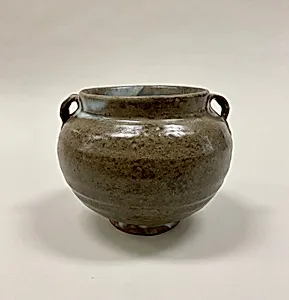
Jar
Unknown Artist
13th–14th century
Medium
Stoneware with light blue glaze (Jun ware)
Dimensions
H. 5 5/8 in. (14.3 cm); Diam. 7 in. (17.8 cm)
Classification
Ceramics
Culture & Period
China · Yuan dynasty (1271–1368)
Department
Asian Art
Museum
Metropolitan Museum of Art, New York, NY
Credit
H. O. Havemeyer Collection, Bequest of Mrs. H. O. Havemeyer, 1929
Accession Number
29.100.211
Rights
Public Domain
Art Historical Context
This elegant jar, crafted in China's Yuan dynasty (1271–8), exemplifies the revered Jun ware tradition. Made of stoneware and coated in a signature light blue glaze, it just 5⅝ inches tall with a 7-inch diameter, perfect for holding oils, spices, or small treasures in a scholarly household. Produced in northern China's Jun kilns around the 13th–14th, such vessels were prized for their subtle beauty rather than bold decoration. Jun ware's artistic magic lies in its glazing technique: potters layered iron-rich glazes over high-fired stoneware, firing them multiple times in wood-fueled kilns. This created the glaze's hallmark crackle pattern and ethereal sky-blue hues, with subtle purples or greens emerging unpredictably from chemical reactions—nature's artistry captured in clay. Though the artist remains unknown, these jars reflect Yuan-era innovation, blending Song dynasty aesthetics with Mongol patronage that spurred ceramic experimentation. A gem from the H. O. Havemeyer Collection, bequeathed to the Metropolitan Museum of Art in 1929, this jar invites us to appreciate the quiet poetry of everyday objects, bridging ancient kilns to modern admiration.