
Jar
Unknown Artist
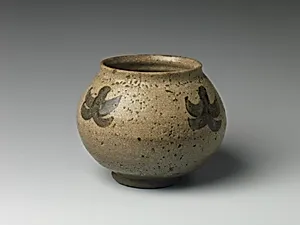
Medium
Stoneware with painted decoration in underglaze brown iron (Karatsu ware)
Dimensions
H. 4 1/2 in. (11.4 cm); Diam. 6 in. (15.2 cm)
Classification
Ceramics
Culture & Period
Japan · Momoyama period (1573–1615)
Department
Asian Art
Museum
Metropolitan Museum of Art, New York, NY
Credit
Dr. and Mrs. Roger G. Gerry Collection, Bequest of Dr. and Mrs. Roger G. Gerry, 2000
Accession Number
2002.447.21
Rights
Public Domain
Art Historical Context
This modest stoneware jar, a fine example of Karatsu ware Japan's Momoyama period (15731615), exemplifies the's embrace of rustic simplicity and bold functionality. Standing 4½ inches tall a 6-inch diameter its compact form suggests everyday use—perhaps for storing tea, spices, or cosmetics—reflecting the period's vibrant tea culture and domestic life amid samurai grandeur and castle-building. Karatsu ware, produced in Saga Prefecture (then Hizen province), emerged prominently after Japanese potters adopted techniques from Korean immigrants following Toyotomi Hideyoshi's invasions in the 1590s. The jar's painted decoration in underglaze brown iron—fired beneath the glaze for a durable, earthy tone—highlights this fusion, creating subtle motifs that prioritize texture and spontaneity over refinement. Unlike ornate imperial porcelains, Karatsu pieces celebrated wabi-sabi aesthetics: imperfect, natural beauty that resonated in tea ceremonies hosted by warlords. Now in the Metropolitan Museum of Art's Asian Art collection, thanks to the bequest of Dr. and Mrs. Roger G. Gerry in 2000, this anonymous artisan's work captures Momoyama's dynamic spirit—a time when Japan blended imported innovation with indigenous taste, influencing ceramics for centuries.