
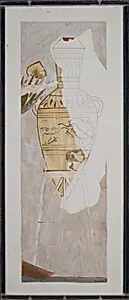
Jar and Stand, Tomb of Nakht
ca. 1390–1352 B.C.
Medium
Tempera on paper
Dimensions
H. 35 cm (13 3/4 in); w. 11.5 cm (4 1/2 in) scale 1:1
Classification
Facsimile, Nakht (TT 161), jar and stand
Period
New Kingdom
Department
Egyptian Art
Museum
Metropolitan Museum of Art, New York, NY
Credit
Rogers Fund, 1930
Accession Number
30.4.230
Rights
Public Domain
About this artwork
This tempera facsimile preserves the vivid decoration of an Egyptian tomb painting that has weathered nearly 3,400 years. Charles K. Wilkinson, working with The Metropolitan Museum of Art's Egyptian Expedition Graphic Section in 1921–22, meticulously documented the Tomb of Nakht (Theban tomb 52) during the reign of Amenhotep III (circa 1390–1352 BCE). Executed at 1:1 scale, Wilkinson's facsimiles serve dual purposes: providing scholars and publics access to tomb paintings while creating permanen...
Art Historical Context
This tempera facsimile by Charles K. Wilkinson captures a painted jar and stand from the Tomb of Nakht (Theban tomb 52), created during Egypt’s New Kingdom, Dynasty 18, under Amenhotep III (ca. 1390–1352 B.C.). Executed at actual size on paper, the work meticulously records the original tomb decoration’s vibrant colors and refined details before time could further erode them. Wilkinson produced it while working with the Metropolitan Museum’s Egyptian Expedition in the early 1920s, part of a systematic effort to document Theban tombs. The original painting adorned the funerary equipment of a relatively modest official, yet its graceful lines and balanced composition reflect the artistic flowering of Dynasty 18 at Thebes. Such tomb scenes served both practical and symbolic purposes, ensuring the deceased had the objects needed in the afterlife while showcasing the elegance of daily Egyptian life. Today the facsimile offers visitors a vivid window into ancient artistry that might otherwise be lost. Wilkinson’s precise copy, now in the Met’s collection, exemplifies how early twentieth-century archaeologists blended technical skill with scholarly care to preserve cultural heritage for future generations.
About the Artist
Charles K. Wilkinson · 1897–1986
Charles K. Wilkinson (1897–1986), born Charles Kyrle Wilkinson in London on October 13, 1897, was the son of Horace W. Wilkinson, a stained-glass window maker, and Frances Adkins. Serving in World War I, he honed his artistic skills at the Slade School of Fine Art, University College London, where the influential director Henry Tonks shaped the rigorous training of a generation of draughtsmen. In ...