
Jar, Canaanite, miniature
Unknown Artist
750–480 BCE
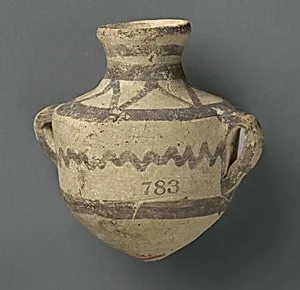
Medium
Terracotta
Dimensions
3 11/16in. (9.4cm)
Classification
Vases
Culture & Period
Cypriot · Cypro-Archaic I–II
Department
Greek and Roman Art
Museum
Metropolitan Museum of Art, New York, NY
Credit
The Cesnola Collection, Purchased by subscription, 1874–76
Accession Number
74.51.899
Rights
Public Domain
Art Historical Context
This delicate miniature jar, crafted from terracotta around 750–480 BCE during Cyprus's Cypro-Archaic I–II period, exemplifies the island's role as a vibrant cultural crossroads. Standing just 3 11/16 inches (9.4 cm) tall, it belongs to the Canaanite jar style—a Phoenician-inspired form typically used for storing oils, perfumes, or spices. Though small, its wheel-thrown construction and fine clay firing highlight the skilled pottery techniques of Cypriot artisans who blended Eastern Mediterranean influences from the Levant with local traditions. In the Cypro-Archaic era, Cyprus thrived as a hub for trade between Egypt, the Near East, and emerging Greek world, making vessels like this essential for daily life, rituals, or elite households. Terracotta's durability and affordability allowed widespread production, yet this jar's miniature scale suggests it may have served ceremonial purposes, such as offerings in tombs or sanctuaries, underscoring the spiritual dimensions of everyday objects. Acquired as part of The Cesnola Collection at The Metropolitan Museum of Art, this piece offers a tangible link to Cyprus's ancient prosperity. Visitors can marvel at how such a tiny artifact captures the interconnected ancient world, bridging Canaanite designs with Cypriot innovation.