
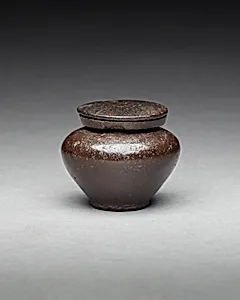
Jar for Eye Paint (kohl)
Unknown Artist
ca. 1850–1700 B.C.
Medium
Black stone
Classification
Kohl jar
Period
Late Middle Kingdom
Department
Egyptian Art
Museum
Metropolitan Museum of Art, New York, NY
Credit
Gift of Helen Miller Gould, 1910
Accession Number
10.130.1272a–c
Rights
Public Domain
Art Historical Context
Step into the world of ancient Egypt with this elegant **Jar for Eye Paint (ohl)**, crafted around 1850–1700 B.C. during the Late Middle Kingdom (Dynasty 12, late, to Dynasty 13). Housed in the Metropolitan Museum of Art's Egyptian Art department, this unassuming black stone vessel was a practical yet refined everyday object, gifted by Helen Miller Gould in 1910. Kohl, a dark pigment made from minerals like galena, was essential for lining the eyes, offering both cosmetic allure and believed protection against the evil eye and harsh desert sun. The jar's black stone—likely a durable variety such as diorite or basalt—highlights the Egyptians' mastery of hard-stone working. Artisans hollowed and polished it to create a smooth, lidded container perfect for storing the precious paste, demonstrating advanced lapidary techniques without metal tools. Such vessels were status symbols, used by both elites and commoners to enhance beauty in a culture that revered symmetry and adornment. This artifact offers a glimpse into Middle Kingdom daily life, bridging art and utility amid a period of stability and innovation before the Second Intermediate Period's upheavals. Imagine ancient fingers dipping into its depths, applying kohl with ivory or wooden sticks— a timeless ritual of transformation.